

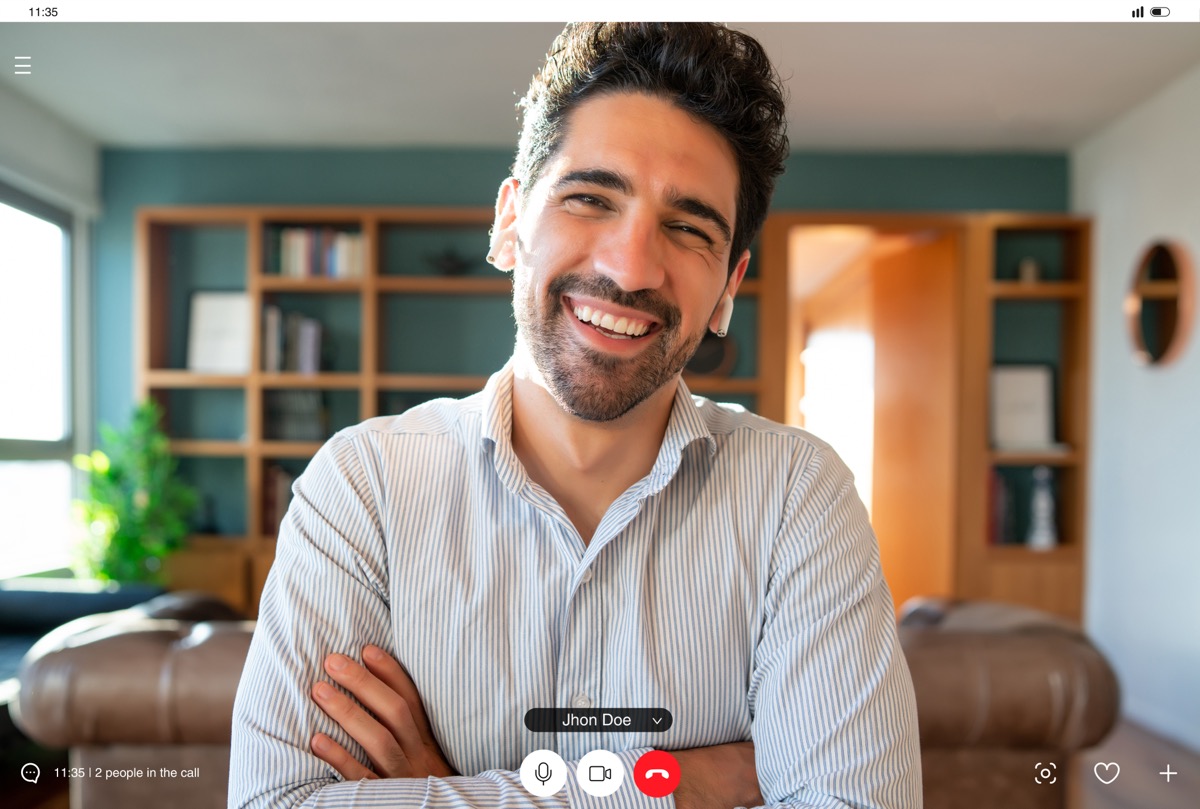
Before you pay a copay or commit to a course of treatment, you deserve an honest answer to a basic question: does therapy delivered over video actually produce real clinical change, or is it just a convenient approximation of “the real thing”? As a Licensed Certified Social Worker who has provided both in-person and telehealth sessions for 15+ years, here is a clinician’s honest read of the peer-reviewed evidence, with every citation linked to its DOI so you can verify for yourself.
This is not a marketing page. It is a literature review, written in plain English, covering what the research actually shows about telehealth therapy versus traditional in-person care, including where the evidence is strong, where it is mixed, and the specific situations where in-person care is still the better choice.
Bottom Line Up Front
- For depression, anxiety, PTSD, and adjustment disorders, multiple systematic reviews and meta-analyses conclude that video-delivered therapy is non-inferior to in-person therapy, meaning outcomes are statistically equivalent.
- The therapeutic alliance (the working relationship between you and your therapist, the single strongest predictor of outcomes) can be built effectively over video. A 2018 meta-analysis found no significant difference between videoconferencing and in-person alliance scores.
- Some conditions have less robust evidence for telehealth: severe eating disorders, psychosis during acute phases, substance use with active withdrawal risk, and therapy for children under age 7.
- Telehealth reduces dropout in several trials, likely because it removes logistical barriers (travel, childcare, missed work) that cause real-world attrition.
What “Non-Inferior” Actually Means
Most of the telehealth research you will encounter uses a specific study design called a non-inferiority trial. This is a stricter standard than “equally good” in casual conversation. A non-inferiority trial asks: is Treatment B (telehealth) not meaningfully worse than Treatment A (in-person), within a pre-specified margin set by clinical researchers before the study begins?
When a study concludes that telehealth is non-inferior to in-person care, it means: even if we assume the worst-case scenario consistent with the data, telehealth does not produce clinically worse outcomes. This is a higher bar than a simple “no statistically significant difference,” and it is the design used in the trials cited below.
The Evidence, Condition by Condition
Depression
Luxton and colleagues (2016) conducted a randomized non-inferiority trial of home-based telehealth behavioral activation therapy versus in-office treatment for U.S. military personnel and veterans with major depression. The trial found equivalent reductions in depression severity at post-treatment and 12-month follow-up (Luxton et al., 2016, Journal of Consulting and Clinical Psychology).
A broader 2018 meta-analysis of internet-delivered and computer-delivered cognitive behavior therapy for depression and anxiety disorders, pooling data across 64 studies, concluded that computerized CBT is “effective, acceptable, and practical healthcare” with effect sizes comparable to face-to-face CBT (Andrews et al., 2018, Journal of Anxiety Disorders).
Anxiety Disorders
The same Andrews meta-analysis found robust effect sizes for generalized anxiety disorder, panic disorder, and social anxiety disorder. In head-to-head comparisons of guided internet CBT versus face-to-face CBT, Cuijpers and colleagues found no significant difference in effect size across depression and anxiety trials (Cuijpers et al., 2010, Psychological Medicine).
For social anxiety specifically, remote delivery may actually benefit a subset of clients, since entering an in-person waiting room and navigating social contact with reception staff is itself anxiogenic for this population, though formal moderator analyses on this are limited.
PTSD
Post-traumatic stress disorder has some of the strongest telehealth evidence, largely because the Veterans Affairs system invested heavily in telehealth for rural veterans. Acierno and colleagues (2016) randomized patients with PTSD to either home-based video therapy or in-office therapy using Behavioral Activation and Therapeutic Exposure. The trial found non-inferior PTSD symptom reduction (Acierno et al., 2016, Depression and Anxiety).
Morland and colleagues (2015) ran a similar non-inferiority trial comparing telemedicine-delivered Cognitive Processing Therapy (CPT) against in-person CPT in women veterans with combat-related PTSD. Telemedicine was non-inferior on PTSD symptoms and on depression, anxiety, and stress outcomes (Morland et al., 2015, Depression and Anxiety).
Adjustment Disorder and Everyday Distress
Varker and colleagues (2019) conducted a rapid evidence assessment specifically evaluating synchronous (live video) telepsychology for anxiety, depression, PTSD, and adjustment disorder. Across 24 included studies, the authors concluded that synchronous video-delivered therapy produces equivalent outcomes to in-person care for these conditions (Varker et al., 2019, Psychological Services).
The Therapeutic Alliance Question
Across every school of therapy, the single strongest non-specific predictor of outcomes is the therapeutic alliance: the collaborative working relationship between client and clinician, including agreement on goals, agreement on the tasks of therapy, and the affective bond. If video therapy systematically weakened alliance, that would be a serious concern even if symptom outcomes looked similar.
Norwood and colleagues (2018) published a systematic review and non-inferiority meta-analysis specifically on this question, pooling alliance data across 12 studies comparing videoconferencing psychotherapy to in-person psychotherapy. Two findings stood out (Norwood et al., 2018, Clinical Psychology & Psychotherapy):
- Alliance scores were not significantly different between video and in-person modalities.
- Alliance was a strong predictor of clinical outcomes in both modalities: the mechanism is preserved, not bypassed, when therapy moves online.
In practice, what this means clinically is that alliance is not magically conferred by physical co-location. It is built through clinician skill, responsiveness, genuine interest, and shared decision-making, all of which transfer to video with minimal loss.
The working relationship does most of the work in therapy. Video does not weaken that relationship: it just changes the setting.
Ready to Talk With a Licensed Clinician?
Free 15-minute phone consultation · Telehealth or in-person therapy · BCBS preferred provider
Not sure yet? Take our free 2-minute well-being check-in
Where the Evidence Is Weaker or Mixed
A truly honest review has to acknowledge where telehealth evidence is thinner. A responsible clinician will recommend in-person care, or a hybrid model, when the evidence supports it. These are the cases where we typically recommend in-person sessions, at least initially:
Active Crisis and Imminent Risk
When a person is in acute suicidal crisis or experiencing active psychotic symptoms, the ability to conduct a full in-person safety assessment, coordinate emergency services on-site, and physically de-escalate matters in ways that video cannot replicate. Telehealth is not appropriate as a first-line intervention during active crisis; in these situations, call 988, text HOME to 741741, or go to your nearest emergency room.
Severe Eating Disorders
Because eating disorder treatment often requires weight monitoring, medical stabilization, and observation of meal behaviors, full telehealth delivery has less evidence and is typically delivered as part of a hybrid or higher-level-of-care model.
Substance Use With Withdrawal Risk
Alcohol and benzodiazepine withdrawal can be medically dangerous and require in-person medical monitoring. Telehealth can play a strong supporting role in substance use treatment post-stabilization, but initial medical withdrawal is not an appropriate telehealth setting.
Young Children
Most telehealth evidence is in adults and adolescents. For children under approximately age 7, therapy formats relying on play, body regulation, and in-room relational cues translate less directly to video, though parent-mediated approaches delivered via telehealth to caregivers do have supportive evidence.
Couples Therapy
Evidence for couples therapy specifically by video is growing but still less robust than individual therapy research. Many couples do well with telehealth, but some dynamics (high conflict, recent betrayal trauma) often benefit from a few in-person sessions to establish safety structure before moving to virtual.
Why Outcomes Vary Even When the Evidence Is Strong
Equivalent average outcomes in clinical trials do not mean every client will have an equivalent experience. Five factors determine whether telehealth works well for you, specifically:
- Private, Stable Space A consistent location where you will not be overheard or interrupted. If privacy in your home is not possible, some clients use their car, a rented office, or a private space at a library.
- Reliable Bandwidth Most telehealth platforms work well on 1.5 Mbps upload, but lag and freezing will disrupt emotional attunement and affect the session. Wired ethernet or strong WiFi beats mobile data.
- Therapist Competence in the Modality Good telehealth therapy is not the same as in-person therapy delivered on Zoom. Skilled virtual clinicians adjust pacing, make more explicit use of verbal tracking (because subtle body cues are harder to read), and know how to handle technical interruptions without losing therapeutic thread.
- Client Fit Some clients find video more comfortable (less judgment from being in a new space). Others feel video reduces the sense of containment that a shared physical room creates. Neither is wrong; knowing your own preference matters.
- Treatment Approach Suitability Evidence-based approaches that translate especially well to video include CBT, ACT, Behavioral Activation, CPT for PTSD, and Motivational Interviewing. Approaches involving body work or in-room exposure hierarchies sometimes benefit from hybrid delivery.
How to Evaluate If Telehealth Is Right for You
Based on the evidence above and 15+ years of clinical practice combining both modalities, here is a practical decision framework:
Telehealth is likely a strong fit if:
- Your presenting concerns are depression, anxiety, PTSD, adjustment issues, stress, or grief
- You have a private, reliable space and adequate technology
- You are safe from imminent harm and not in acute psychiatric crisis
- You are comfortable with video conferencing in general
- Logistical barriers (commute, childcare, work schedule) currently make in-person attendance hard to sustain
Consider in-person or hybrid care if:
- You are currently in active suicidal crisis or psychosis
- You have a severe eating disorder or are medically unstable
- You are in active alcohol or benzodiazepine withdrawal
- You have no consistent private space to take sessions
- You personally prefer the containment of being in a shared physical room (a legitimate preference, not a weakness)
How We Approach Telehealth at ZipHealthy
Our clinicians deliver telehealth using the same evidence-informed approaches we use in person: Cognitive Behavioral Therapy, Acceptance and Commitment Therapy, EMDR for trauma, Dialectical Behavior Therapy skills, and relational approaches, adapted for video delivery with clinician training specifically in virtual-modality competencies.
Concretely:
- HIPAA-compliant platform with end-to-end encryption; sessions are never recorded
- Backup protocol for technical failures (secondary video link, phone fallback, reschedule if neither works)
- Initial assessment includes evaluating whether telehealth is clinically appropriate for you, including a safety and support-system review
- Hybrid option available: you can alternate between our Bentonville office and video sessions week to week
- Same-week appointments typical; free 15-minute consultation to assess fit with no commitment
If you are still weighing whether online or in-person care fits your situation better, our companion article: Telehealth Benefits for Northwest Arkansas Residents: covers the practical, day-to-day side (commute savings, weather resilience, insurance coverage, rural access) in more detail.
Frequently Asked Questions
Which telehealth therapy studies are considered the strongest evidence?
Randomized controlled non-inferiority trials and systematic reviews rank highest in the evidence hierarchy. For telehealth, the most cited high-quality trials include Acierno et al. (2016) and Morland et al. (2015) for PTSD, Luxton et al. (2016) for depression, Norwood et al. (2018) for therapeutic alliance, and Andrews et al. (2018) and Varker et al. (2019) for meta-analytic evidence across conditions. All are linked in the References section below.
What about dropout and adherence rates?
Several studies have found lower dropout in telehealth conditions, likely because removing travel, parking, and childcare logistics makes session attendance easier to sustain. This matters clinically, because dropout is itself a predictor of worse outcomes regardless of modality.
Does telehealth work for trauma therapy specifically?
Yes. Both Cognitive Processing Therapy (Morland et al., 2015) and exposure-based approaches (Acierno et al., 2016) show non-inferior outcomes via telehealth. EMDR also has emerging evidence for effective virtual delivery, though the evidence base is smaller than for CPT and Prolonged Exposure. For active crisis or severe dissociation, an in-person start is often recommended.
How do I know if my therapist is qualified to deliver telehealth?
Three indicators: (1) they are licensed in the state where you are physically located during the session (not just where they practice); (2) their platform is explicitly HIPAA-compliant with a signed Business Associate Agreement; (3) they can describe what they do when a session is interrupted by a technical problem and how they assess safety remotely. At ZipHealthy, all licensed clinicians are trained specifically in virtual-modality clinical skills.
Are these study results generalizable to me?
The trials cited cover adults with depression, anxiety, PTSD, and adjustment disorder, across diverse populations including veterans, civilian adults, and some adolescents. Outcomes generalize well for these conditions. If your situation involves an under-studied population (e.g., young children, severe eating disorders, active psychosis), a clinician should help you weigh whether the existing telehealth evidence applies to your specific case.
References
All sources below are peer-reviewed publications. DOIs link directly to the journal page. This list will be updated as new high-quality evidence emerges.
- Acierno, R., Gros, D. F., Ruggiero, K. J., Hernandez-Tejada, M. A., Knapp, R. G., Lejuez, C. W., … & Tuerk, P. W. (2016). Behavioral activation and therapeutic exposure for posttraumatic stress disorder: A noninferiority trial of treatment delivered in person versus home-based telehealth. Depression and Anxiety, 33(5), 415–423. https://doi.org/10.1002/da.22476
- Andrews, G., Basu, A., Cuijpers, P., Craske, M. G., McEvoy, P., English, C. L., & Newby, J. M. (2018). Computer therapy for the anxiety and depression disorders is effective, acceptable and practical health care: An updated meta-analysis. Journal of Anxiety Disorders, 55, 70–78. https://doi.org/10.1016/j.janxdis.2018.01.001
- Backhaus, A., Agha, Z., Maglione, M. L., Repp, A., Ross, B., Zuest, D., … & Thorp, S. R. (2012). Videoconferencing psychotherapy: A systematic review. Psychological Services, 9(2), 111–131. https://doi.org/10.1037/a0027924
- Bashshur, R. L., Shannon, G. W., Bashshur, N., & Yellowlees, P. M. (2016). The empirical evidence for telemedicine interventions in mental disorders. Telemedicine and e-Health, 22(2), 87–113. https://doi.org/10.1089/tmj.2015.0206
- Cuijpers, P., Donker, T., van Straten, A., Li, J., & Andersson, G. (2010). Is guided self-help as effective as face-to-face psychotherapy for depression and anxiety disorders? A systematic review and meta-analysis of comparative outcome studies. Psychological Medicine, 40(12), 1943–1957. https://doi.org/10.1017/S0033291710000772
- Luxton, D. D., Pruitt, L. D., Wagner, A., Smolenski, D. J., Jenkins-Guarnieri, M. A., & Gahm, G. (2016). Home-based telebehavioral health for U.S. military personnel and veterans with depression: A randomized controlled trial. Journal of Consulting and Clinical Psychology, 84(11), 923–934. https://doi.org/10.1037/ccp0000135
- Morland, L. A., Mackintosh, M. A., Rosen, C. S., Willis, E., Resick, P., Chard, K., & Frueh, B. C. (2015). Telemedicine versus in-person delivery of cognitive processing therapy for women with posttraumatic stress disorder: A randomized noninferiority trial. Depression and Anxiety, 32(11), 811–820. https://doi.org/10.1002/da.22397
- Norwood, C., Moghaddam, N. G., Malins, S., & Sabin-Farrell, R. (2018). Working alliance and outcome effectiveness in videoconferencing psychotherapy: A systematic review and noninferiority meta-analysis. Clinical Psychology & Psychotherapy, 25(6), 797–808. https://doi.org/10.1002/cpp.2315
- Varker, T., Brand, R. M., Ward, J., Terhaag, S., & Phelps, A. (2019). Efficacy of synchronous telepsychology interventions for people with anxiety, depression, posttraumatic stress disorder, and adjustment disorder: A rapid evidence assessment. Psychological Services, 16(4), 621–635. https://doi.org/10.1037/ser0000239
- American Psychological Association. (2013, revised periodically). Guidelines for the practice of telepsychology. https://www.apa.org/practice/guidelines/telepsychology
Ready to Take the Next Step?
Free 15-minute consultation · Same-week appointments · Most insurance accepted

Stephen Velasquez, MBA, MSW, LCSW

Evidence-Informed Care, Delivered Your Way
Our clinicians practice the same evidence-informed approaches cited in the research above (CBT, ACT, EMDR, CPT, and Behavioral Activation) delivered by video, in person at our Bentonville office, or in a hybrid model. Schedule a free 15-minute phone consultation to discuss which fits you best.
Start from home...
Anxiety Management Toolkit
Grounding exercises, coping strategy cards, guided audio track, and clinician-designed worksheets. Use alongside your telehealth sessions or on your own.
Get the Toolkit: $34.99Instant PDF download · Designed by our licensed clinicians
For educational and personal development purposes. Not a substitute for professional therapy.