
Depression is often described as “sadness,” but anyone who has lived through it knows that misses the point. The heavier truth is a kind of flatness: things that used to matter stop pulling at you, effort feels enormous, and hope goes quiet. That experience has a biological signature. Here is what is happening in the brain during depression, written and reviewed by a Licensed Clinical Social Worker, and why it is genuinely treatable.
Depression dims the reward circuit
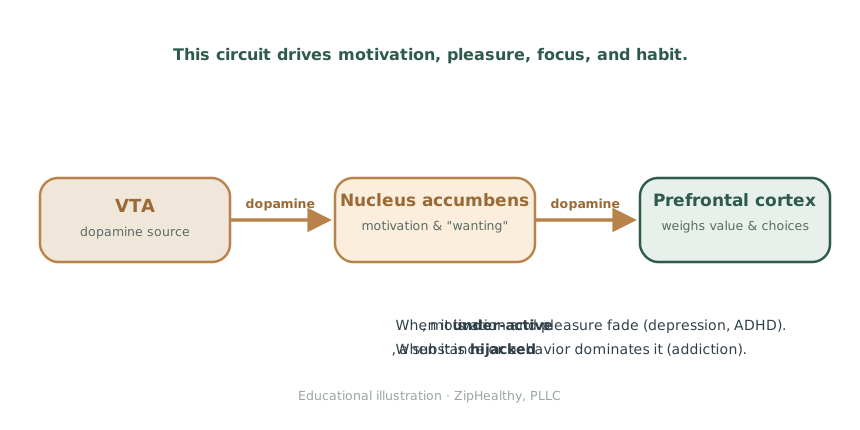
One of the most consistent findings in depression involves the brain’s reward and motivation circuit: the dopamine pathway running from a region called the VTA to the nucleus accumbens and prefrontal cortex. When this circuit is under-active, the brain stops registering the usual “pull” toward food, connection, accomplishment, or pleasure. Clinicians call this anhedonia, and it explains the most disabling part of depression: not sadness, but the loss of wanting.
The thinking brain and the stuck loop
Depression also changes the balance between brain networks. The prefrontal cortex (responsible for planning, energy, and perspective) tends to be under-active, while the default mode network (the brain’s self-referential, mind-wandering system) becomes overactive and “sticky.” That combination shows up as rumination: the same heavy, self-critical thoughts looping without resolution. It is not a personal weakness; it is a network that has gotten stuck in a groove.
Stress, cortisol, and the body
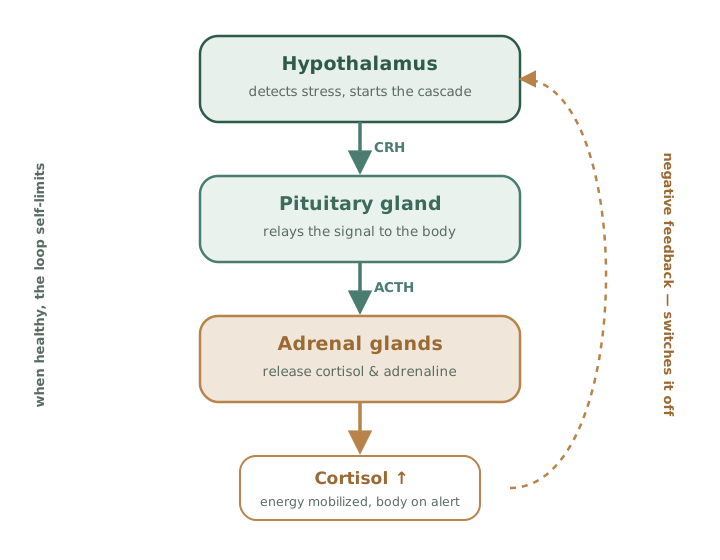
Chronic stress is one of depression’s most common on-ramps. Prolonged activation of the HPA axis, the body’s stress-hormone system, keeps cortisol elevated, which over time can wear on the hippocampus (memory and mood regulation) and deepen the depressive pattern. This is part of why depression is felt in the body: fatigue, changes in sleep and appetite, and a leaden heaviness are neurological, not imagined.
“Is depression just a chemical imbalance?”
The myth
Depression is simply “low serotonin,” and the only fix is to top up that one chemical.
What the science says
The “chemical imbalance” slogan is an oversimplification the field has moved past. Depression involves reward circuitry, stress hormones, network balance, inflammation, genetics, and life context, not a single chemical being low.
This matters enormously, because the “one chemical” story makes people feel that medication is the only lever. In reality, because depression is a whole-system pattern, several different levers work: therapy, behavioral change, exercise and sleep, social connection, and, for some people, medication. They converge on the same circuits.
The good news: this circuit can recover
Depression is one of the most treatable conditions in medicine, and the reason is neuroplasticity. Behavioral activation (gently, deliberately re-engaging with rewarding activity even before motivation returns) helps re-awaken the reward circuit. Cognitive therapy loosens the rumination loop and strengthens prefrontal regulation. Together they retrain the very networks the depression has dimmed.
Depression is not one thing
“Depression” covers several patterns that look different in the brain and in life. Melancholic depression brings early waking, worse mood in the morning, and profound loss of pleasure. Atypical features can include sleeping and eating more, not less. Seasonal patterns track the light and the circadian clock. Postpartum depression layers hormonal shifts onto the same circuits. They share the reward-and-regulation signature described above, but the differences matter, because they point toward different supports, from light and routine to specific therapies.
Why movement, light, and connection are “brain medicine”
Some of the most effective things for depression aren’t talk at all: they are biology. Exercise increases a brain-growth protein (BDNF) that supports neuroplasticity and lifts the reward system; for some people it rivals other treatments for mild-to-moderate depression. Light and a steady sleep-wake rhythm stabilize the circadian system that depression disrupts. Social connection engages reward and safety circuits that withdrawal starves. This is the science behind behavioral activation: deliberately doing rewarding, meaningful, or active things before motivation returns, which gently restarts the dimmed circuit. It feels backwards (you wait to feel like it), and that is exactly the trap depression sets.
The practical takeaway: you don’t have to feel motivated first. Acting first (in small, doable steps) is what re-awakens the motivation circuit. Depression lies by telling you to wait until you feel better to start living; recovery usually runs the other way.
When to reach out
If low mood, loss of interest, or hopelessness have lasted more than two weeks, or if effort itself has become hard, that is the brain’s reward and regulation systems struggling, and it responds to treatment. You can take a private depression self-check (PHQ-style), learn about depression therapy in Northwest Arkansas and by telehealth, or read about options when depression hasn’t responded before. Our team offers a free 15-minute consultation: call (479) 259-1390. If you are having thoughts of suicide, call or text 988 now.
Frequently asked questions
Why can't I just “snap out of it”?
Because depression is a change in how reward, motivation, and regulation circuits function, not a choice or an attitude. Telling a depressed brain to try harder is like telling someone with a sprained ankle to run faster. Treatment works with the biology.
Is depression genetic?
Genes contribute to vulnerability, but life stress, loss, illness, and environment all interact with them. Because experience is part of the picture, experience, including therapy, can also be part of the recovery.
Does therapy actually change the depressed brain?
Yes. Behavioral activation and cognitive therapy are associated with measurable changes in reward and prefrontal circuitry. More on how therapy changes the brain.
Do I need medication?
Not necessarily. Therapy is an effective first-line treatment on its own; for some people a prescriber also recommends medication. Because depression is multifactorial, the right plan is individual: a conversation for you, your therapist, and your physician.
Put it into practice
Mood Restoration Companion Toolkit
Evidence-informed exercises, mood tracking, and coping tools to support recovery, created by a licensed therapist.
Get the Toolkit: $34.99Instant PDF download · Designed by a licensed clinician
For educational and personal development purposes. Not a substitute for professional therapy.
References
- National Institute of Mental Health (NIMH). Depression. nimh.nih.gov
- American Psychological Association. Depression. apa.org
- MedlinePlus, U.S. National Library of Medicine. Depression. medlineplus.gov
- Harvard Health Publishing. Understanding the stress response. health.harvard.edu