
When the body hurts but tests come back clear, it is easy to hear “it’s all in your head” and easy to feel dismissed. The truth is more respectful and more accurate: the brain and body are one connected system, and real physical symptoms can be generated and amplified by that system under stress. The pain is real. Here is the neuroscience, reviewed by a Licensed Clinical Social Worker.
The brain is the body’s control center
Every sensation you feel (pain, nausea, a racing heart) is constructed by the brain from body signals plus context and expectation. A region called the insula monitors the internal body state, and the brain constantly predicts what the body “should” feel. Under chronic stress or after illness, this prediction-and-alarm system can become over-tuned, amplifying ordinary signals into genuine, distressing symptoms.
Stress speaks through the body
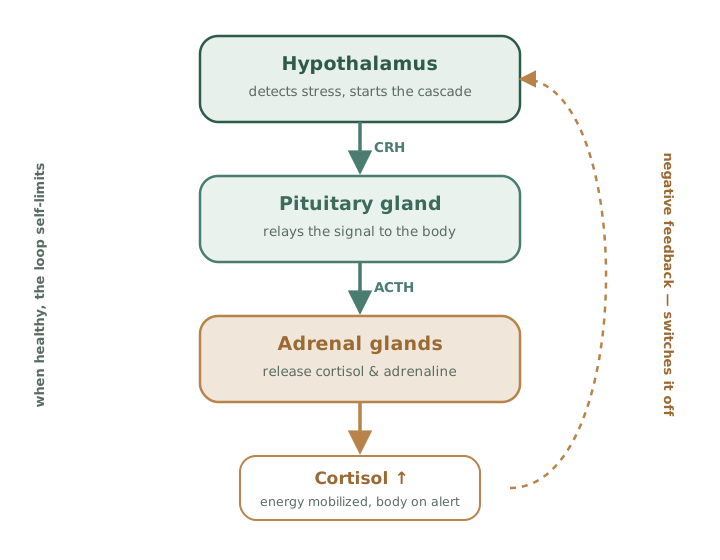
The HPA axis and autonomic nervous system translate emotional stress directly into physical states: muscle tension, gut changes, fatigue, pain sensitivity. This is not imagination; it is physiology. In somatic symptom conditions, the volume on these body signals is turned up, and worry about the symptoms turns it up further: a loop much like the one in anxiety.
The myth
If tests are normal, the symptoms aren’t real: it’s “all in your head.”
What the science says
The symptoms are real and physical. They are generated and amplified by a brain-body system that has become over-sensitized, which means they can also be turned back down.
Turning the volume back down
Because the brain-body alarm is learned, it can be retrained. Therapy, including CBT and nervous-system regulation skills, helps lower symptom amplification, reduce the fear that feeds it, and restore function. This works alongside, not instead of, good medical care.
Common ways stress speaks through the body
When the brain-body alarm is turned up, it tends to show up in predictable places. The gut, richly wired to the brain, responds with nausea, pain, or changes in digestion. Muscles tense, producing headaches, jaw pain, and back pain. The heart and lungs speed up, causing palpitations or breathlessness. General fatigue, dizziness, and pain sensitivity are common. None of this is imagined: these are genuine physiological effects of an over-activated stress system. The trouble starts when worry about the symptoms amplifies them further, the same vicious loop seen in anxiety: sensation → alarm → more sensation.
When to reach out
If distressing physical symptoms persist and worry about them has taken over, therapy can help, not by dismissing the symptoms, but by calming the system that amplifies them. Keep working with your medical provider, and consider adding this support. Call (479) 259-1390 for a free 15-minute consultation.
Frequently asked questions
Does this mean my symptoms are fake?
No. The symptoms are real and physically felt. They are produced and amplified by an over-sensitized brain-body system, which is exactly why a brain-body approach can help.
Should I stop seeing my doctor?
No. Continue your medical care. Therapy works alongside it to address the stress and symptom-amplification component.
Can therapy really reduce physical symptoms?
Yes. CBT and nervous-system regulation skills can lower symptom amplification and the distress that feeds it, improving both symptoms and function.
Put it into practice
Somatic & Body-Based Wellness Toolkit
Grounding exercises, body scans, and somatic tools for stress the body holds, created by a licensed therapist.
Get the Toolkit: $34.99Instant PDF download · Designed by a licensed clinician
For educational and personal development purposes. Not a substitute for professional therapy.
References
- MedlinePlus, U.S. National Library of Medicine. Somatic Symptom Disorder. medlineplus.gov
- American Psychological Association. Stress effects on the body. apa.org
- Harvard Health Publishing. Understanding the stress response. health.harvard.edu