
For a long time, addiction was treated as a moral failing: a matter of weak will. Decades of neuroscience have replaced that view with a clearer and more compassionate one: addiction is a condition of the brain’s reward, motivation, and self-control systems. That isn’t an excuse; it’s the key to effective treatment. Here is what happens in the brain, reviewed by a Licensed Clinical Social Worker.
A hijacked reward system
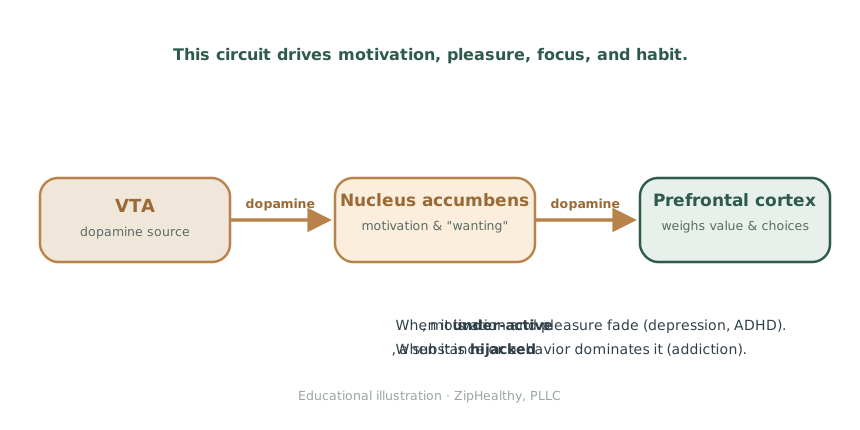
The brain’s reward circuit, the dopamine pathway from the VTA to the nucleus accumbens and prefrontal cortex, evolved to make survival behaviors (eating, connection) feel good and worth repeating. Addictive substances and behaviors flood or amplify this circuit far beyond natural levels. Over time, the brain adapts: it turns down its own dopamine response, so ordinary pleasures feel flat and it takes more of the substance just to feel normal.
How it changes the chemistry
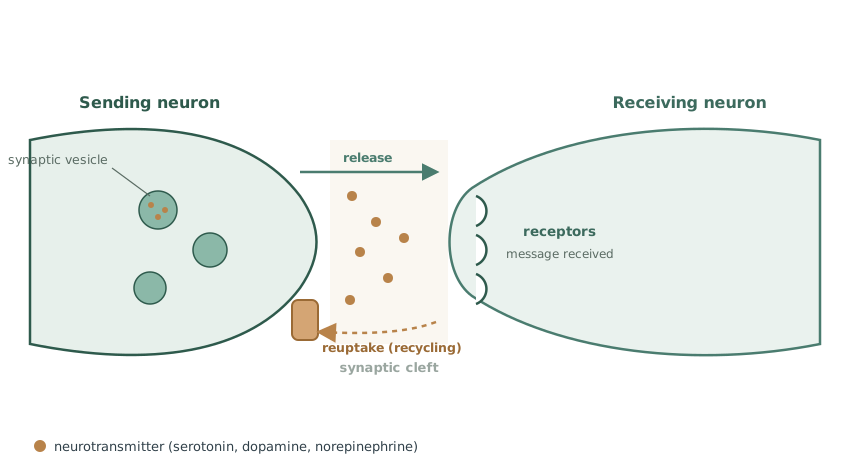
At the level of the synapse, substances alter how neurotransmitters like dopamine are released and recycled, driving the intense “wanting” that fuels craving. With repetition, these changes become learned and durable, which is why cravings can resurface long after someone stops.
The three-stage cycle
Researchers describe addiction as a recurring loop across three brain systems: intoxication (reward circuit), withdrawal and negative feelings (the stress systems switch on, so not using feels awful), and preoccupation and anticipation (the prefrontal cortex’s control weakens while craving strengthens). Each stage pulls toward the next, which is why willpower alone so often isn’t enough.
The myth
Addiction is simply a lack of willpower; if someone really wanted to stop, they would.
What the science says
Addiction changes the very brain systems that govern motivation and self-control. Recovery is absolutely possible, but it works by treating those systems, not by demanding more willpower from a brain whose control circuitry is impaired.
The brain can recover
Here is the hopeful part: thanks to neuroplasticity, the brain’s reward and control systems can heal with sustained recovery. Therapy helps rebuild prefrontal control, identify and rewire triggers, treat the anxiety, depression, or trauma that so often drive use, and develop new sources of reward. For some substances a prescriber may also recommend medication as part of care; decisions about medication belong with your physician, and we coordinate around them.
Why relapse isn’t failure
Because addiction physically rewires reward and memory circuits, cues (a place, a person, a feeling) can trigger intense craving long after someone stops, sometimes for years. That is why relapse is common and why it is best understood not as a moral collapse but as a feature of a chronic brain condition, like a flare in any other chronic illness. Treatment plans expect it, learn from it, and build the skills to ride out cravings without acting on them. Each time the brain weathers a craving without using, the old circuit weakens a little more.
Addiction and the rest of mental health
Substances are often an attempt to solve another problem, to quiet anxiety, lift depression, numb trauma, or sleep. This is why treating addiction in isolation so often fails: the underlying driver is still there. Effective care treats the whole person, addressing the anxiety, depression, or trauma that fuel use alongside the addiction itself. That dual focus is one of the strongest predictors of lasting recovery.
When to reach out
If a substance or behavior has taken more space, more control, or more cost than you want, and stopping has been harder than expected, that is the biology of addiction, and it is treatable. Our team offers a free, confidential 15-minute consultation: call (479) 259-1390. For free, confidential 24/7 referrals you can also reach the SAMHSA National Helpline at 1-800-662-4357. If you are in crisis, call or text 988.
Frequently asked questions
Is addiction really a brain disease?
Major scientific and medical bodies describe addiction as a treatable, chronic condition involving changes in the brain’s reward, stress, and self-control circuits. This framing improves treatment: it doesn’t remove responsibility for recovery.
Why is it so hard to just stop?
Because addiction weakens the prefrontal control systems while strengthening craving and making not-using feel physically and emotionally awful. That combination overpowers willpower, which is why structured treatment works better.
Can the brain heal after addiction?
Yes. Through neuroplasticity, reward and control circuits recover with sustained abstinence and treatment, though timelines vary by substance and person.
Does therapy help with addiction?
Yes. Therapy rebuilds self-control, rewires triggers, and treats the underlying anxiety, depression, or trauma that often drive use. For some people a prescriber also recommends medication as part of care.
Put it into practice
Renewed Living Wellness Toolkit
Relapse-prevention tools, trigger tracking, and evidence-informed coping strategies created by a licensed therapist.
Get the Toolkit: $44.99Instant PDF download · Designed by a licensed clinician
For educational and personal development purposes. Not a substitute for professional therapy.
References
- National Institute on Drug Abuse (NIDA). Drugs, Brains, and Behavior: The Science of Addiction. nida.nih.gov
- Substance Abuse and Mental Health Services Administration (SAMHSA). National Helpline. samhsa.gov
- National Institute of Mental Health (NIMH). Substance Use and Co-Occurring Mental Disorders. nimh.nih.gov
- MedlinePlus, U.S. National Library of Medicine. Drug Use and Addiction. medlineplus.gov