
Bipolar disorder is widely misunderstood as simply “mood swings” or being temperamental. In reality it is a brain-based condition affecting the systems that regulate mood, energy, and reward, producing episodes that can last days or weeks, not minutes. Understanding the biology helps replace blame with an effective, lifelong management plan. Here is the neuroscience, reviewed by a Licensed Clinical Social Worker.
A mood-regulation system that swings too far
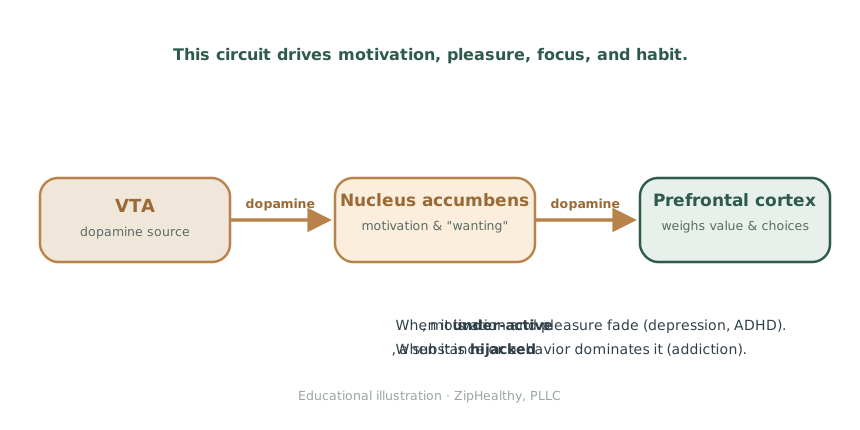
The brain constantly tunes mood and energy through circuits linking the prefrontal cortex (regulation and judgment), the limbic system (emotion), and the reward circuit (drive and motivation). In bipolar disorder, the brain’s ability to keep these systems in balance is impaired. The set-point doesn’t hold: it swings into mania/hypomania (the reward and energy systems running too hot) or into depression (those same systems running too cold).
Two poles, one regulation problem
Mania / hypomania
Reward and drive systems overactive: elevated or irritable mood, less need for sleep, racing thoughts, impulsivity, and grandiosity.
Depression
Reward and energy systems underactive: low mood, fatigue, loss of interest, and the heaviness of a depressive episode.
The shared root
Both poles reflect the same underlying problem: the brain struggling to stabilize mood and energy around a healthy set-point.
Sleep, rhythm, and the brain’s clock
One of the most distinctive features of bipolar disorder is its tight link to circadian rhythm: the brain’s internal clock. Disrupted sleep can both signal and trigger episodes, especially mania. This is why protecting sleep and daily routine is not just lifestyle advice in bipolar care: it is a direct intervention on the biology.
“Isn’t that just being moody?”
The myth
Bipolar means rapidly switching moods through the day, or just being dramatic.
What the science says
Bipolar episodes are sustained shifts in mood, energy, and function lasting days to weeks, rooted in how the brain regulates mood and reward. It is a medical condition, not a personality trait.
How it’s treated, and the role of therapy
This is important: bipolar disorder is a condition where ongoing care from a prescriber (psychiatrist or medical provider) is the foundation of treatment. As therapists, we do not prescribe or manage medication: we coordinate closely with your prescriber. What therapy adds is powerful and evidence-based: psychoeducation, mood and sleep monitoring, early-warning-sign planning, routine stabilization, and support for the relationships and self-esteem that episodes can strain. Together, medical care and therapy substantially reduce relapse.
Knowing your early warning signs
One of the most empowering parts of living well with bipolar disorder is that episodes usually have a prodrome: subtle early signs before a full episode. For mania it might be needing less sleep, faster thoughts, or new big plans; for depression, creeping withdrawal and fatigue. Learning your personal pattern, often by tracking mood and sleep, lets you and your care team intervene early, when it is far easier to steer. This kind of self-monitoring and relapse-prevention planning is a core part of what therapy contributes alongside medical care.
Living well between episodes
Much of bipolar care happens when things are stable: protecting sleep and daily rhythm (the brain’s clock), managing stress, limiting substances that destabilize mood, and building the relationships and structure that buffer against episodes. None of this replaces medical treatment, but together with it, these rhythms give the brain’s mood-regulation system the steadiest possible footing.
When to reach out
If you experience distinct periods of unusually high energy and reduced need for sleep, alternating with depressive lows, an evaluation is worthwhile: bipolar disorder is very manageable with the right team. Because medication requires a prescriber, we’ll help you connect with one while providing the therapy side of care. Call (479) 259-1390 for a free 15-minute consultation. If you are in crisis, call or text 988.
Frequently asked questions
Is bipolar disorder the same as mood swings?
No. Everyday mood swings last minutes to hours and usually have a clear cause. Bipolar episodes are sustained changes in mood, energy, sleep, and functioning lasting days to weeks.
Is it caused by something I did?
No. Bipolar disorder is a highly heritable, brain-based condition. Stress and sleep loss can trigger episodes in someone who is vulnerable, but they don’t cause the disorder.
Can therapy treat bipolar disorder on its own?
Therapy is a vital part of care, but bipolar disorder typically requires medical management from a prescriber as the foundation. We provide the therapy component and coordinate with your prescriber.
Why does sleep matter so much?
Bipolar disorder is closely tied to the brain’s circadian clock. Disrupted sleep can trigger episodes, so protecting sleep and routine is a core part of staying well.
References
- National Institute of Mental Health (NIMH). Bipolar Disorder. nimh.nih.gov
- American Psychological Association. Bipolar disorder. apa.org
- MedlinePlus, U.S. National Library of Medicine. Bipolar Disorder. medlineplus.gov
- Harvard Health Publishing. Understanding the stress response. health.harvard.edu