
Personality disorders are among the most stigmatized and least understood conditions in mental health. The newer, evidence-based view is far more hopeful: these are patterns of emotion regulation, self-image, and relationships that developed, often as adaptations to early experience, and that the brain can learn to change. Here is the neuroscience, reviewed by a Licensed Clinical Social Worker.
Patterns, not flaws
A personality disorder describes a long-standing pattern in how a person experiences themselves, regulates emotion, and relates to others: a pattern that causes real distress. These patterns frequently take root early, as understandable adaptations to an environment that felt unsafe or invalidating. The brain learned them; the brain can also relearn.
The emotion-regulation circuit
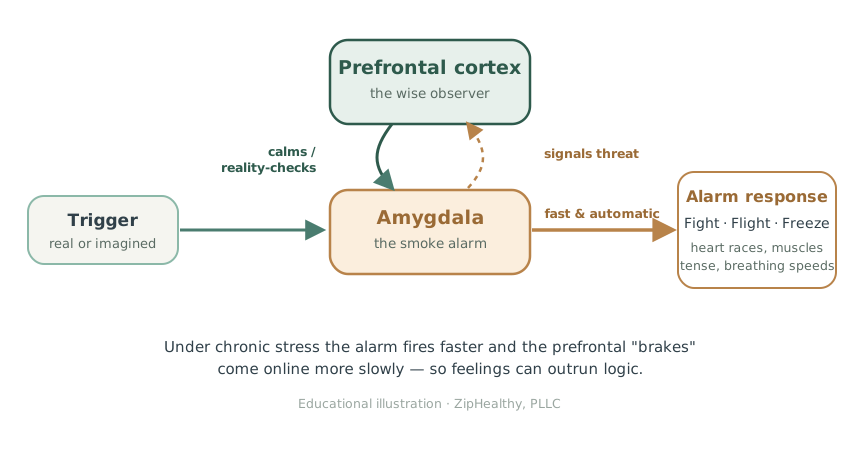
Much of the research, especially on borderline personality, points to the balance between the amygdala (emotional intensity) and the prefrontal cortex (regulation). When the amygdala is highly reactive and prefrontal regulation is harder to engage, emotions arrive fast, big, and slow to settle, driving the intense feelings, fear of abandonment, and impulsivity that can follow.
The myth
Personality disorders are permanent, and people who have them are “manipulative” or untreatable.
What the science says
These are treatable patterns rooted in emotion-regulation circuitry. Therapies like DBT produce major, lasting improvement, and many people no longer meet criteria after effective treatment.
The brain can learn new patterns
This is where the science turns genuinely hopeful. Structured therapies (especially Dialectical Behavior Therapy (DBT), schema therapy, and mentalization-based therapy) directly train the regulation skills the circuit is missing. Through neuroplasticity, repeated practice strengthens the prefrontal “brakes” and steadies the emotional alarm. Of all the conditions surrounded by hopeless stereotypes, this is one where good treatment most dramatically changes lives.
Why these patterns begin, and why that matters
Personality patterns usually form at the intersection of temperament (an inborn emotional sensitivity, partly genetic) and early environment. A child who feels deeply and grows up somewhere unpredictable, invalidating, or frightening will adapt, learning, for example, that emotions must be huge to be heard, or that closeness is dangerous. Those adaptations were intelligent at the time. The problem is that the brain keeps running them long after the original environment is gone. Understanding this does two things: it dissolves blame, and it points to the fix: the same brain that learned the pattern can learn a new one.
It’s a spectrum, and self-awareness already helps
These traits exist on a continuum; many people recognize milder versions of these patterns in themselves without having a disorder. Wherever someone falls, the skills are the same: noticing the emotional surge earlier, widening the pause before reacting, and practicing new responses in real relationships. Simply understanding your own pattern (that the intensity is the brain’s old alarm, not the truth of the moment) is itself the first regulating step.
When to reach out
If intense emotions, unstable relationships, or a shaky sense of self have been a long-running source of pain, effective help exists, and it works. Our team offers a free 15-minute consultation: call (479) 259-1390. If you are in crisis, call or text 988.
Frequently asked questions
Are personality disorders permanent?
No. They are patterns that developed over time and can change with effective therapy. Many people improve substantially or no longer meet diagnostic criteria after treatment.
What causes them?
A combination of temperament (including genetics) and early experiences, especially environments that felt unsafe or invalidating. The patterns often began as adaptations.
What treatment works best?
Skills-based therapies such as DBT, schema therapy, and mentalization-based therapy have strong evidence, particularly for borderline personality. They train the emotion-regulation skills the brain is missing.
References
- National Institute of Mental Health (NIMH). Borderline Personality Disorder. nimh.nih.gov
- American Psychological Association. Personality. apa.org
- MedlinePlus, U.S. National Library of Medicine. Personality Disorders. medlineplus.gov